Description
That is a wonderful item to discuss! The Thekua Maker is not just a tool; it’s a piece of cultural tradition, especially in the Eastern parts of India and Nepal.
Here is a detailed overview of the Thekua Maker (also known as a Thekua Sancha or Khajoor Mould):
🍪 The Thekua Maker (Thekua Sancha)
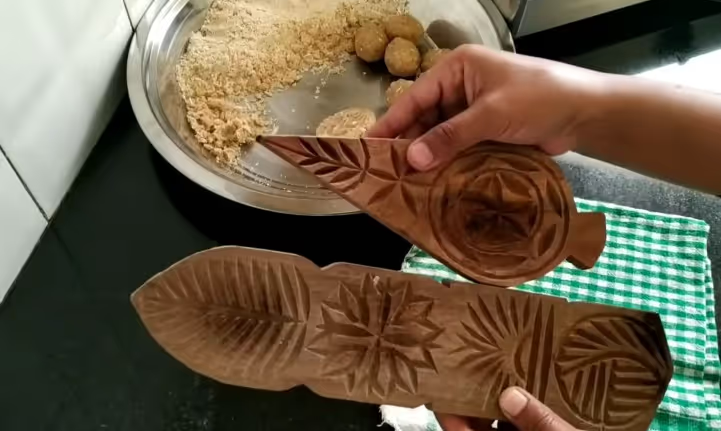
The Thekua Maker is a traditional, hand-carved mould used to press patterns onto the dough of the classic Indian sweet called Thekua (or Thokwa/Thekariis/Khajuria).
It is an indispensable kitchen tool for preparing this sweet, especially during the revered Chhath Puja festival, where Thekua is offered as the Maha Prasad (great offering) to the Sun God (Surya Dev).
📐 Design and Material
-
Material: The traditional and most prized Thekua makers are crafted from wood, often sturdy and fragrant types like Sheesham (Indian Rosewood) or Mango wood. They are a testament to Indian craftsmanship, often handmade by skilled artisans.
Shape: They are typically rectangular or paddle-shaped, designed to fit comfortably in one’s hand.
-
Design: One or both sides of the mould feature deeply carved, intricate patterns. These designs vary widely but commonly include:
-
Geometric shapes (squares, diamonds).
-
Floral motifs (lotus, rose, etc.).
-
Nature-inspired textures (leaf or grain patterns).
-
The carved pattern instantly imprints onto the flattened dough ball.
-
✨ Benefits of Using a Thekua Maker
-
Aesthetic Uniformity: The maker ensures every Thekua has a consistent size, thickness, and beautiful, intricate design. This uniformity is important, especially when preparing large batches for a religious offering like prasad.
-
Cultural Authenticity: Using the wooden sancha is a way of preserving traditional cooking methods and connects the cook directly to the cultural heritage of the dish. The mould itself is often an heirloom, passed down through generations.
-
Efficiency: It significantly speeds up the shaping process compared to hand-shaping each one, allowing for quick preparation before deep-frying.
-
Perfect Texture: The pressure applied by the mould flattens the dough to an ideal thickness, which contributes to the signature crispy (khasta) outer layer and soft interior of a well-made Thekua.
❓ Thekua Maker FAQs
Q: What is Thekua?
A: Thekua is a dry, sweet biscuit or cookie from the Indian subcontinent, particularly popular in Bihar, Jharkhand, and parts of Uttar Pradesh and Nepal. It is made from a simple dough of whole wheat flour, jaggery (or sugar), ghee, and often features dried coconut and fennel seeds.
Q: How do you use the Thekua Maker (Sancha)?
A: The process is simple:
-
Prepare the Dough: Make a firm, crumbly dough using the ingredients.
-
Grease: Lightly grease the mould with ghee or oil to prevent sticking.
-
Press: Take a small ball of dough, place it on the carved side of the mould, and press down firmly with your palm or thumb to flatten it out and imprint the design.
-
Release: Gently tap or pry the dough off the mould. The flattened piece with the imprinted design is now ready for deep-frying in ghee or oil.
Q: Why is it often called a “Khajoor Mould” as well?
A: The terms are often used interchangeably. While Thekua is the main sweet, the term Khajoor (which means “date palm”) or Khajuria (a type of sweet biscuit) sometimes refers to a similar, date-shaped sweet, and the same mould can be used for both or have different designs on each side.
Q: How do I clean and maintain a wooden Thekua Maker?
A: To ensure its longevity:
-
Do not soak it in water, as this can cause the wood to swell and crack.
-
Wipe it clean immediately after use, brushing off any dough residue.
-
If necessary, wash it gently with a damp cloth and mild soap.
-
Dry it completely before storing. You can occasionally rub a little cooking oil onto the wood to keep it conditioned.
Reviews
There are no reviews yet.